


60 Years Young | Why Tamburlaine's Organic Vision Is Just Getting Started
In the Hunter Valley wine landscape, few names have evolved with as much consistency or conviction as Tamburlaine Organic Wines.
This year marks a significant double milestone: 60 years since the Tamburlaine story began, and 40 years since Managing Director and Head of Grape and Wine Production, Mark Davidson and General Manager Lou Davidson took the helm of the business. Between them, they’ve helped shape one of Australia’s most established organic wine producers into a winery defined not just by what it makes, but by how it thinks.
That thinking has always been forwardfacing. Organic before it was mainstream. Experimental when the market demanded convention. And increasingly, adaptive to a new kind of wine consumer who expects flexibility, transparency, and choice.
While the Tamburlaine name now spans certified organic vineyards, an award-winning distillery, and a growing range of wine styles, its foundation remains deceptively simple: grow well, farm responsibly, and let the vineyard lead.
Mark and Lou have now worked side by side for four decades in a partnership that has quietly guided Tamburlaine through industry shifts, climate challenges, and changing consumer expectations. What has stayed constant is the philosophy.
From evolution to organic certification beginning in the 1980s to today’s biodynamic vineyard trials and sustainability systems, Tamburlaine has always operated with one foot in tradition and the other in adaptation.
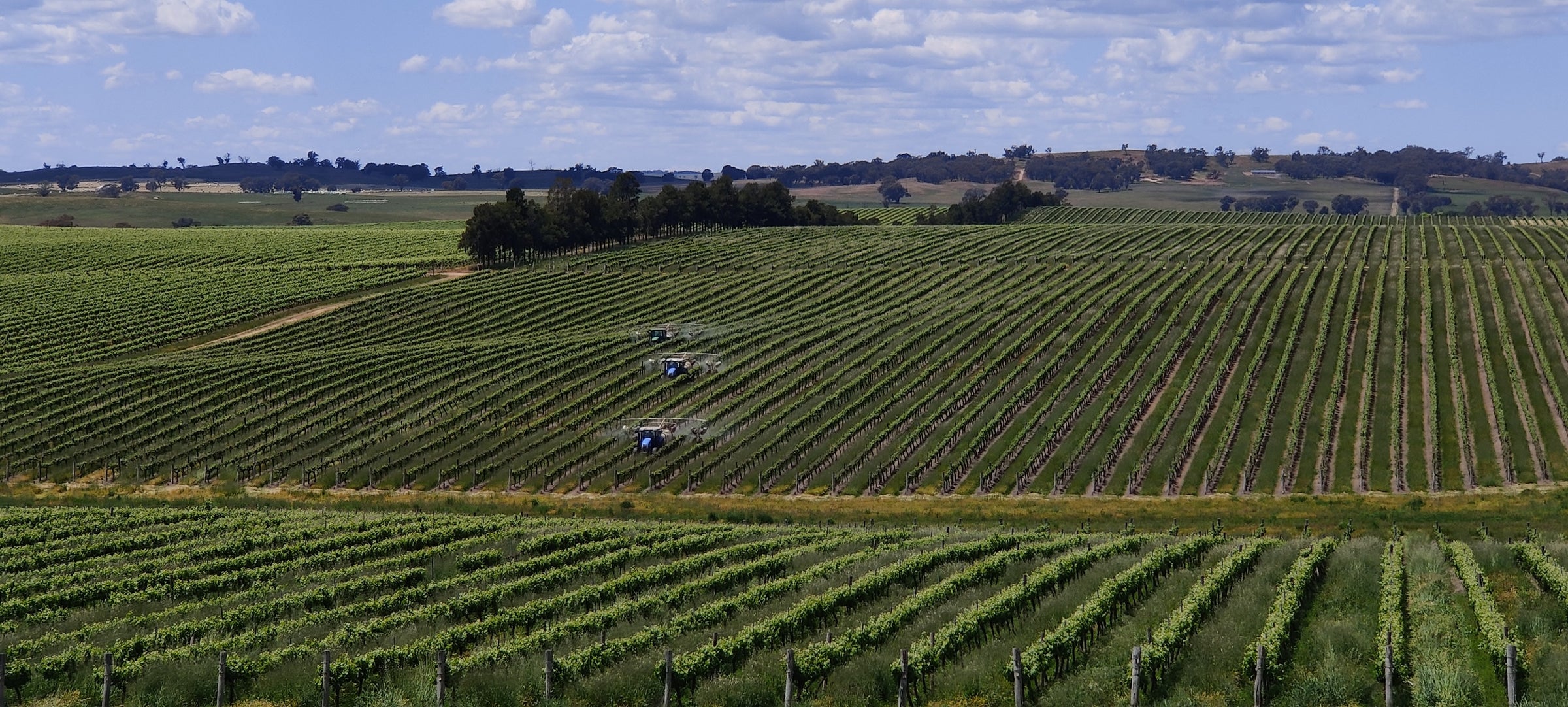
That balance is most visible in the vineyards themselves, particularly in the Orange region’s Borenore Vineyard, which has become a flagship example of modern organic viticulture in practice and is shortlisted in this year’s Vineyard of the Year Awards.
Rather than relying on a single approach, the vineyard uses a layered system tailored to soil type, season, and variety. Soil moisture probes guide irrigation decisions. Weed control is managed mechanically through methods like roll hacking, discing, and mow-and-throw practices that retain organic matter and protect soil structure.

Nutrition is delivered through fertigation using certified organic inputs and biostimulants, while pest and disease management relies on copper, sulphur, and natural enhancers such as potassium silica products.
Even canopy management is highly specific with shoot thinning, bunch thinning, leaf plucking and wire lifting all adjusted vine by vine depending on seasonal conditions. It is, as the team describes it, “vine husbandry without shortcuts”.
And the results are measurable. Improved soil biology, more consistent vine growth, and stronger fruit expression, particularly in varieties such as Cabernet Franc, which has shown marked improvement under these regenerative systems.
Sixty years represents a rare continuity in Australian wine. Forty years of joint leadership represent something even rarer: stability in a category defined by change.
Together, Mark and Lou have overseen Tamburlaine’s growth from a pioneering organic winery into a multi-regional producer with vineyards across New South Wales, a significant export presence, and one of the most diverse portfolios in the country, from table wines to non-alcoholic innovations and spirits.
But perhaps the most significant shift hasn’t been structural. It has been cultural.
One of the most noticeable changes in recent years, according to Samantha Elliott, Executive Director of Branding, Digital Sales and Marketing, is not what people drink but how they choose to drink it.
“The wine consumer expectations have changed,” she says.
“People still love quality wine, but they want flexibility, they want control, and they want to feel like their choices fit their lifestyle.”

That shift has driven a rethink of how Tamburlaine’s membership model works. For decades, the Reserve Members Club has been the winery’s flagship offering - a traditional subscription model delivering allocations of premium, limited-release wines. The Reserve Range is released annually in July in strictly limited quantities that often do not make it to general release.
“It’s essentially an annual subscription to our most awarded wines,” Elliott explains. “And many of those members have been with us for 20, even 30+ years.”
Those long-term members remain central to the business; they’re a living thread through decades of vintages, packaging changes and evolving winemaking styles. But alongside that legacy, a new model has emerged. Tamburlaine’s Organic Rewards program represents a shift in how this winery thinks about loyalty.
Rather than fixed allocations, members can now build their own subscription selecting wines, quantities, and delivery frequency based on personal preference. The program includes a 15 per cent discount on RRP, but more importantly, it reflects how people actually shop today.
“It’s been really well received,” says Elliott.
“People expect customisation now. They want to choose what arrives on their doorstep, and when.”
It’s a model that balances convenience with connection, maintaining the relationship between the winery and its members without the rigidity of traditional club structures. In many ways, it reflects Tamburlaine’s broader philosophy: structured enough to ensure quality, flexible enough to stay relevant. Tamburlaine’s reputation for innovation is well established, but it’s not novelty for novelty’s sake. More often, it’s practical problem-solving.
Smoke-affected fruit during bushfire seasons was reimagined into the Herding Cats gin range. Research partnerships with the University of Adelaide helped shape a more sophisticated alcohol-free wine offering. Lightweight recycled PET bottles introduced through the Lizard Drinking range reduced transport emissions while giving consumers a more practical option for camping, caravanning and outdoor entertaining.
Even in the vineyard, innovation tends to focus on long-term resilience rather than quick fixes. Water use is carefully monitored through soil probes. Mid-row grasses are maintained to reduce heat stress and moisture loss. Mechanical weed control replaces conventional herbicides, while biodiversity initiatives encourage beneficial insects and healthier vineyard ecosystems.
It’s labour-intensive, adaptive and highly seasonal work, but it reflects the same philosophy that has guided Tamburlaine for decades: work with the land, not against it. As Tamburlaine celebrates its 60th year, and Mark and Lou celebrate four decades at the helm, the focus remains firmly on the future - evolving while staying true to the organic principles that have defined the winery from the beginning.
From limited-release Reserve wines and award-winning organic reds to sustainable packaging initiatives, alcohol-free alternatives, and innovative spirits, Tamburlaine continues to adapt to how modern consumers want to drink and connect with wine.
Whether you’re a long-time Reserve Member or discovering the winery for the first time, Tamburlaine’s focus remains the same: thoughtful farming, quality wine, and organic innovation without compromise. Join the Organic Rewards Club with a no cost, no-obligation membership tamburlaine.com.au/rewards.